
Take Control of Your NDT Certification Records
Digitize, track, and manage inspector certifications in one centralized system, ensuring timely renewals, audit-ready documentation, and full confidence in compliance with standards like NADCAP, ISO, and FAA.

One System for Complete NDT Certification Control
Modernizing NDT Records Management
Digital record systems are becoming essential as regulatory standards like ISO, AS9100, NADCAP, and FAA requirements grow more demanding. Paper-based processes introduce hidden compliance risks through scattered records, manual tracking, and limited visibility, making it harder to monitor certification timelines, prepare for audits, and protect critical documentation.
DL QualityCore’s NDT Records Management System address these challenges by centralizing certification data, tracking expiration dates, and automating alerts to prevent lapses. This approach supports continuous audit readiness, simplifies access to records, and integrates with broader quality processes—helping organizations move from reactive compliance to a more proactive, efficient, and confident model.

Digitize Certification Records
Convert paper-based certification files into secure, searchable digital records. This eliminates the risk of lost or damaged documents, reduces manual handling, and creates a reliable foundation for compliance by ensuring all records are consistently stored and easy to access.

Centralize Inspector
Records
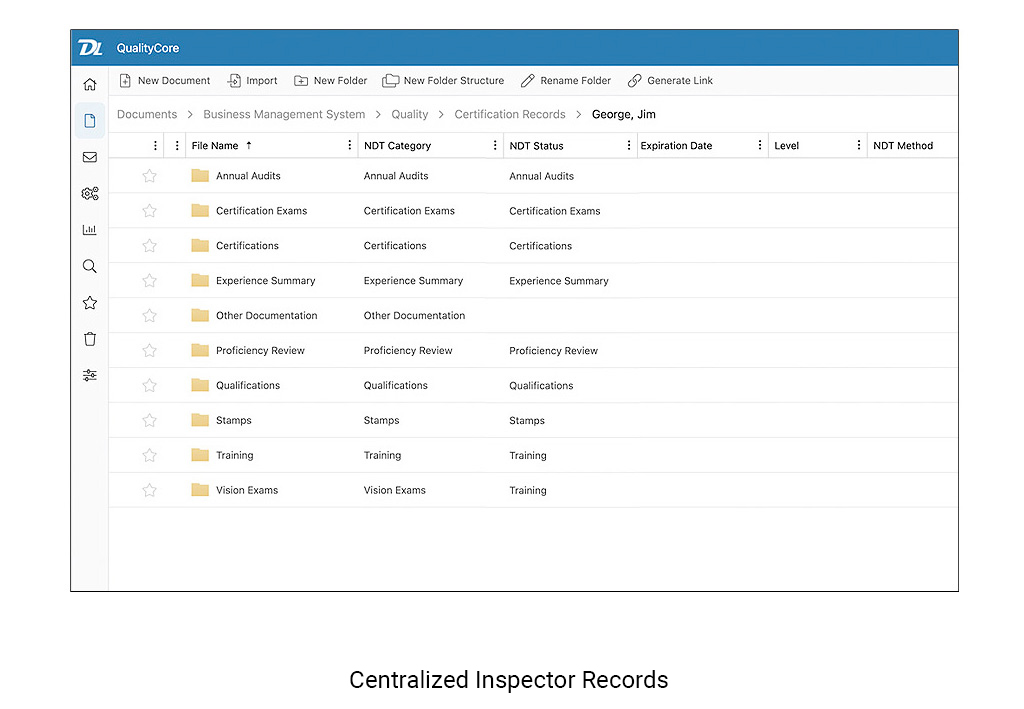
Automatically sort and structure certification documents into dedicated inspector folders. This provides a clear, standardized way to manage personnel records, making it easy to locate information quickly and maintain a complete history of each inspector’s qualifications.

Monitor Certification
Status
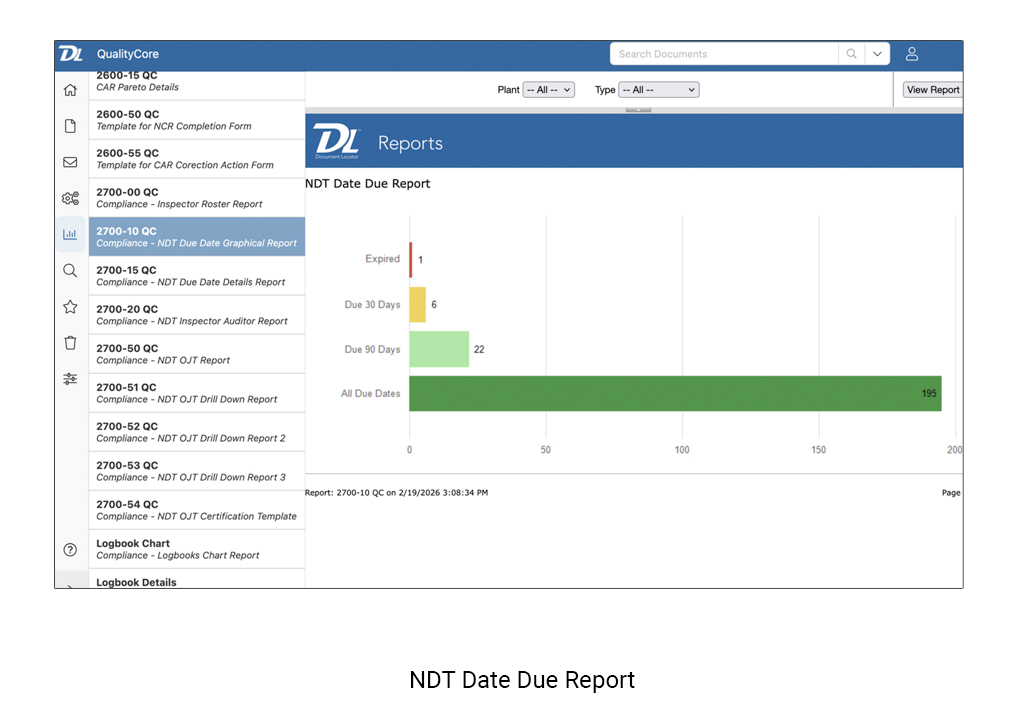
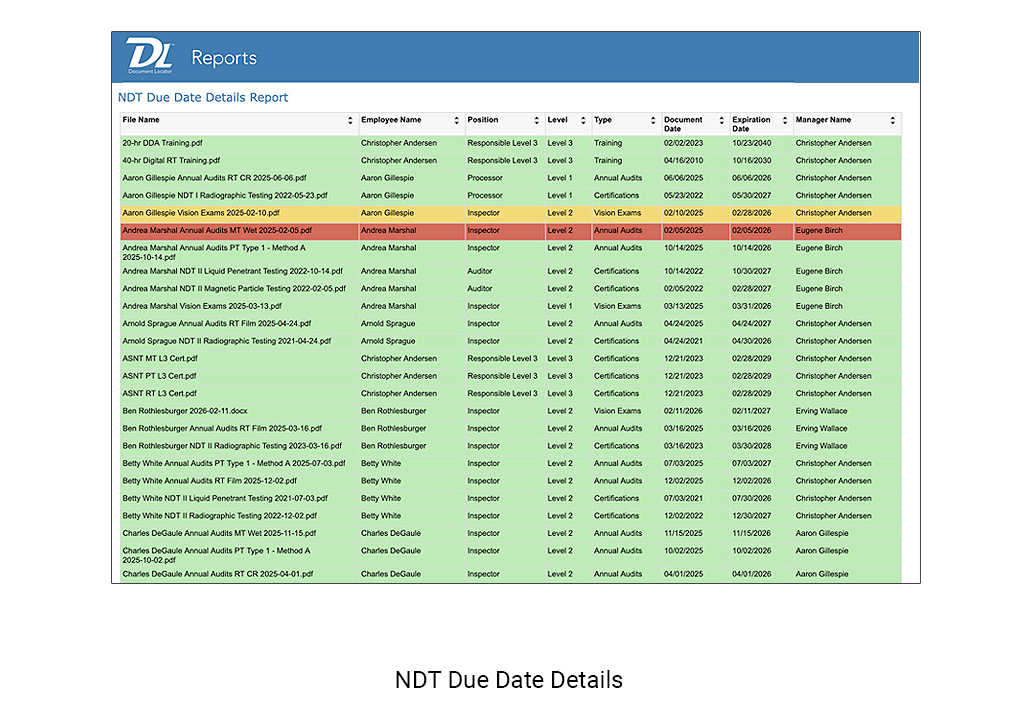
Track certification levels, expirations, and requirements in real time. With clear visibility into current and upcoming statuses, organizations can proactively manage workforce qualifications and ensure inspectors remain compliant with industry standards.

Stay Ahead of Recertification
Use automated alerts—such as 30- and 90-day notifications—to stay ahead of renewal deadlines. These reminders help teams plan recertifications in advance, avoid lapses, and maintain continuous compliance without last-minute scrambling.
The Growing Challenges of Managing NDT Certifications
NDT certification management is becoming increasingly difficult as organizations rely on outdated, manual processes. Spreadsheets and paper-based systems often lead to disorganized records, making it hard to maintain a clear and accurate view of inspector certifications. This lack of structure increases the likelihood of missed renewal deadlines, exposing organizations to compliance risks and potential audit findings.
In addition, responding to audits becomes more time-consuming and stressful when records are scattered or difficult to locate. Instead of quickly accessing the required documentation, teams must spend valuable time searching for information, slowing down audit response and impacting efficiency.
Keep track of certification deadlines and proactively manage renewals to avoid lapses that could impact compliance or operational readiness.
Organize and store certification records in a way that aligns with NADCAP requirements, ensuring documentation is always audit-ready and easy to validate.
Access complete inspector certification histories quickly through a centralized system, eliminating time spent searching through files or spreadsheets.
Secure important documents with controlled access, backups, and digital storage to prevent loss, damage, or unauthorized changes.
Maintain a clear, real-time view of inspector certifications, levels, and compliance status to support better decision-making and resource planning.
NDT Certification Records FAQs
Organizations are expected to maintain controlled records documenting formal training, hands-on experience, written and practical examinations, vision and color perception testing, technical reviews, and certification or authorization decisions. These records must clearly demonstrate that personnel are trained, qualified, authorized, and current.
NDT certification is not a one-time event. Vision examinations, technical evaluations, and certification renewals must be completed on defined schedules, and organizations must ensure personnel do not perform inspections under expired, suspended, or incomplete certification status. Auditors expect proof of uninterrupted compliance over time.
Manual tracking methods such as spreadsheets, calendars, and ad hoc reminders rely heavily on individual diligence. As certification programs grow more complex, the risk of missed deadlines increases and often discovered during audits or after nonconforming work has already occurred.
Certification decisions, examinations, and approvals must be reviewed by authorized technical personnel, with documentation showing who approved each step and under what authority. Even when external experts assist, responsibility for maintaining compliant certification records remains with the employer.
Certification activities often require multiple reviews and approvals, particularly when evaluating training equivalency, prior experience, exam results, or authorization decisions. Automated workflows ensure these steps occur in the correct order and that required approvals are captured before certifications are issued or updated.
Automated reminders ensure that renewals, vision examinations, evaluations, and approval reviews occur on time. Rather than relying on individuals to remember deadlines, the system proactively prompts action, helping prevent lapses that could result in suspended or expired certification status.
Reporting provides real-time visibility into certification status, upcoming expirations, and incomplete requirements across personnel. This visibility allows organizations to address gaps proactively and demonstrate control, consistency, and oversight during audits.
Certification records are not static administrative files. They must remain accurate, complete, current, and auditable throughout their lifecycle. Managing these records within a structured document control system reduces compliance risk and creates a defensible history of certification decisions and changes.